
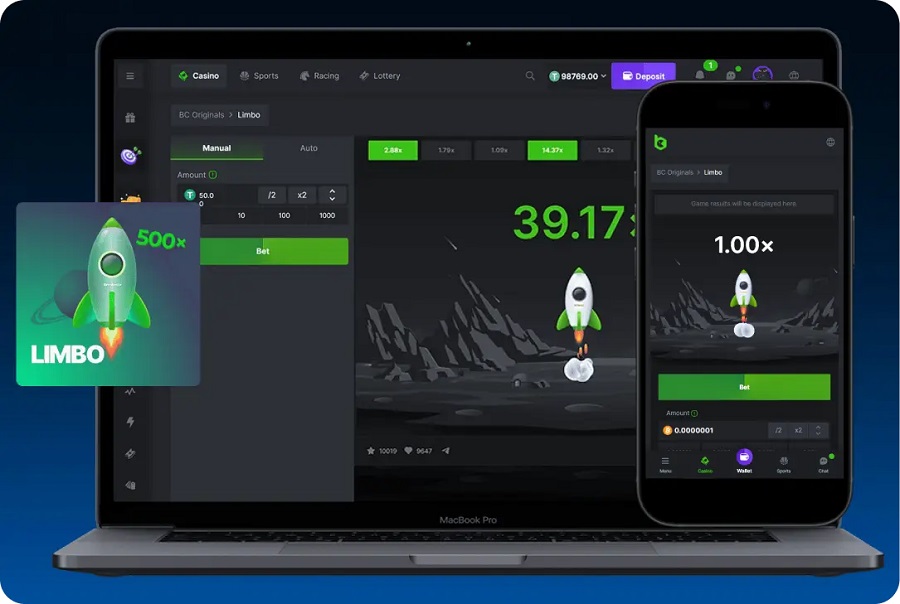

Target multiplier selection in limbo at compatible operators determines both the probability of that round producing a winning outcome and the multiplier applied to the stake when the result equals or exceeds the target, with higher targets reducing win probability while increasing the return from successful rounds. Players who name their own multiplier in limbo at compatible operators access a format whose mathematical structure gives them direct control over the probability-to-return balance their session operates within. Higher target selections at crypto casino games limbo implementations reduce win frequency while maintaining the same house edge percentage that lower target selections apply across equivalent total wagering volume at compatible operators.
Limbo target multiplier mechanics
Target multiplier selection in limbo determines win probability and return amount through a direct inverse relationship that applies consistently across the full target range at compatible operators. Players who select lower targets access higher win probability alongside lower per-win returns, while players who select higher targets access lower win probability alongside higher per-win returns from equivalent stake amounts at compatible operators. Both target selection approaches carry the same underlying house edge applied to total wagering volume, with variance rather than mathematical expectation differing between low and high target configurations at compatible operators.
How do target selections affect session variance?
Target selections affect session variance at compatible operators by determining the frequency and magnitude of winning rounds across extended session samples, with low target selections producing frequent small wins and high target selections producing infrequent large wins from equivalent total wagering volume.
Players who select a 2x target at compatible operators experience winning rounds on approximately half of all limbo rounds within their session, with each winning round returning double their stake before the house margin adjustment. Players who select a 100x target at compatible operators experience winning rounds on approximately one in one hundred rounds, with each winning round returning one hundred times their stake before the house margin adjustment at compatible operators. Both approaches carry the same house edge percentage applied to the total wagering volume across their session, with variance rather than mathematical expectation differing between the two target configurations at compatible operators.
Players who test multiple target selections across extended limbo sessions at compatible operators observe the frequency and magnitude relationship shifting consistently with their target changes, confirming the direct mathematical inverse relationship between target selection and win probability that the format applies across the full available target range at compatible operators.
Provably fair limbo verification
Limbo outcomes at provably fair compatible operators are verifiable through the same seed commitment and hash checking process that covers dice and crash formats, giving players independently confirmable result evidence for every target multiplier round in their session history. Players who store their committed seed data alongside their target multiplier selections build a complete, independently verifiable session record that covers every round outcome across their full limbo participation history at compatible operators.
Verifying limbo outcomes at compatible operators confirms that each round’s result reflects a pre-committed cryptographic determination whose value the player’s named target either matched or failed to match, giving independently verifiable evidence that the operator’s target evaluation applied the player’s chosen threshold accurately to the committed result value at compatible operators.
What happens to odds in limbo when players name their own multiplier reflects the direct inverse relationship between target selection and win probability, with higher targets reducing win frequency while increasing per-win returns, and provably fair verification confirming that each round’s result reflects the pre-committed outcome at compatible operators.